BLACK FOOD HUB
After more than a decade of supporting emerging farmers around the Portland metro area, we are building a home base for our Black Community Food Hub and Food Forest. The Black Community Food Hub will operate as a home base for our cultural foods collaborative - a collective of organizations that support emerging Black farmers, youth, and food-insecure families in our community through apprenticeship programs, youth education, culturally-relevant food pantries, and food box deliveries. This includes a working urban farm that celebrates innovative and creative methods for growing cultural foods, serves our most vulnerable communities, and is critical infrastructure for emerging BIPOC producers.
The Hub is designed as a full loop system driver, minimizing food waste, and maximizing energy efficiency. The full loop approach addresses all stages of the food system, from production to consumption and back to resource renewal. The circular approach to food systems creates equitable access for sustainable agriculture, incubating the next generation of food sovereignty leaders.
We see the Black Community Food Hub as a place of innovation, where we will cultivate community wealth, responsibly steward natural resources, build cooperative growing efforts, and create pipelines for youth to grow greater food sovereignty for our community.
A-THE FOOD HUB
The main building hosts a grocery store, community gathering
and dining hall, classrooms, commercial kitchen, packing and
distribution area, as well as offices for FFF, community health
workers, and other partner organizations.
B-THE BARN
Agricultural shop (for products like fertilizers), equipment
storage, repair shop.
C-HYDROPONIC FREIGHT/ WASH & PACK
Vertical, soil-less farm allows us to grow fresh produce year-
round. Outdoor wash & pack area for processing.
D&E OUTDOOR CLASSROOM & KITCHEN
Area for hosting community workshops and events, located within our food forest.
F-FOOD FOREST
Regenerative systems for diversified crop production that also
serves as a cultural green space (1 acre).
G-MAKERS STUDIO + COMPOST & BIOCHAR
Studio for leather work and woodwork. Soil restoration and
waste reduction infrastructure.
H-HIGH TUNNELS
Greenhouse production includes growing plant starts sold to
local farmers and our tree nursery to expand the agroforest
and plant stock on the site.
I-AGRICULTURAL HOUSING
10 housing units support workforce development, localized
land stewardship, and economic mobility.
J-AGRICULTURAL HOUSING/AGRIHOOD
The agrihood provides our community with resilient housing and stewardship.
Hub INITIATIVES
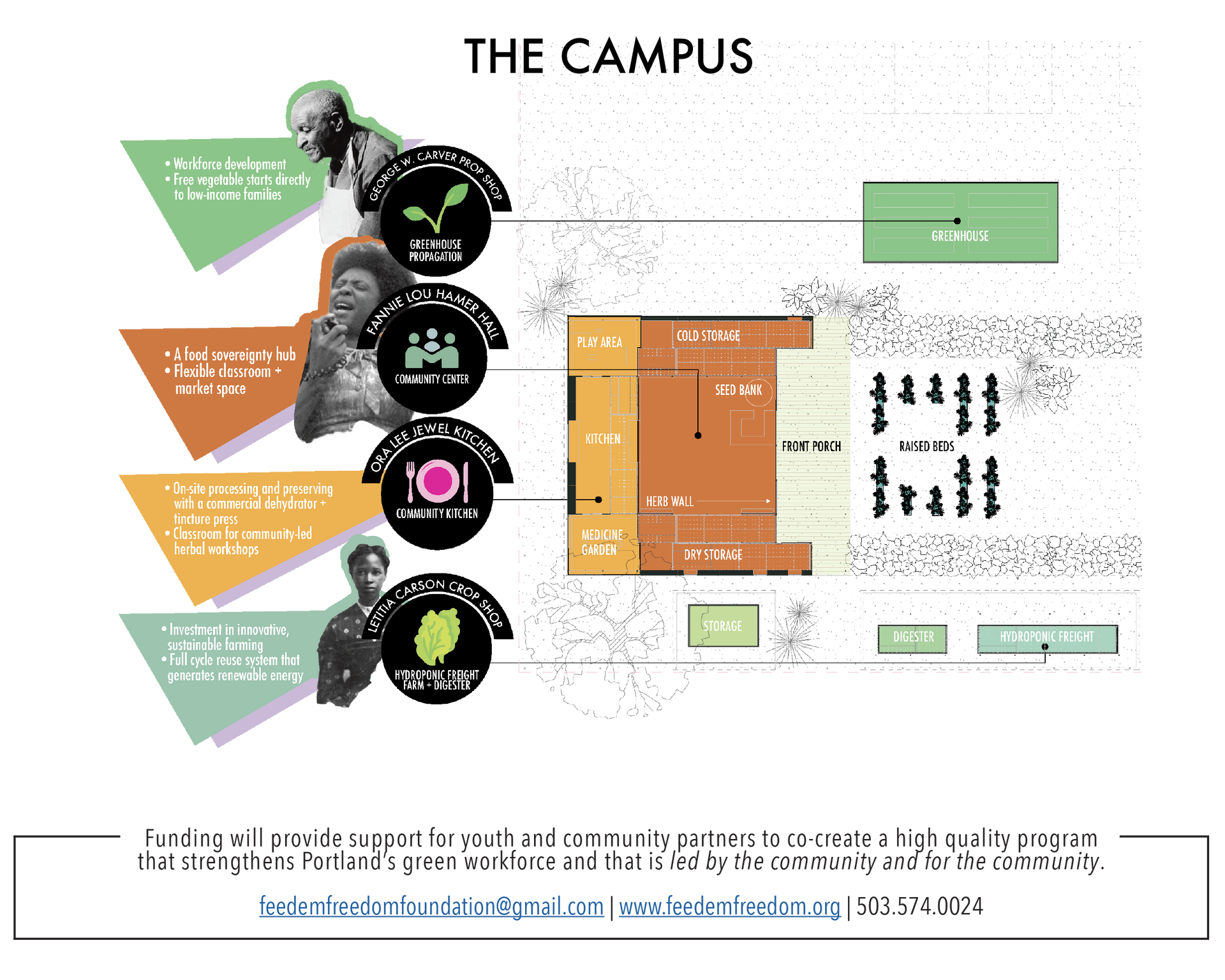
Feed’em Freedom Foundation is creating a community food center that will aggregate the crops of small BIPOC producers and sell them collectively to food service accounts. This will allow BIPOC farmers to scale their business.
Our work in providing better community resources is rooted in restorative justice and building Black, Indigenous and People of Color led food system and economy. By understanding the needs of our community, identifying gaps in the food system, and finding ways to close the gaps, we are building the prosperity and health of historically underserved community.
Community Food Center
The Food Center will be a place that community can not only gain access to culturally-specific food items but have access to classes and other wrap around services.
The Hub will also act as a place for local farmers to utilize space for CSA pick up and distribution.
Produce processing and Commercial kitchen
Due to the nature of the grocery wholesale business, a processor typically needs large amounts of one to several specific types of produce year-round. This project will secure equipment that will both benefit CSA members, food makers, and food service managers.

Refrigerated and frozen storage
Farmers with different microclimates, soil types and infrastructure can only supply produce seasonally. This project aims to bridge this gap with coordination, light processing (chopping, washing, etc.) and cold storage capabilities.

Peer-to-peer learning space
This project will provide peer to peer learning opportunities and space for the community to learn about aquaponics, sustainable farming practices, key produce preservation techniques, and other FFF learning programs.
Hub Network
Marketplace

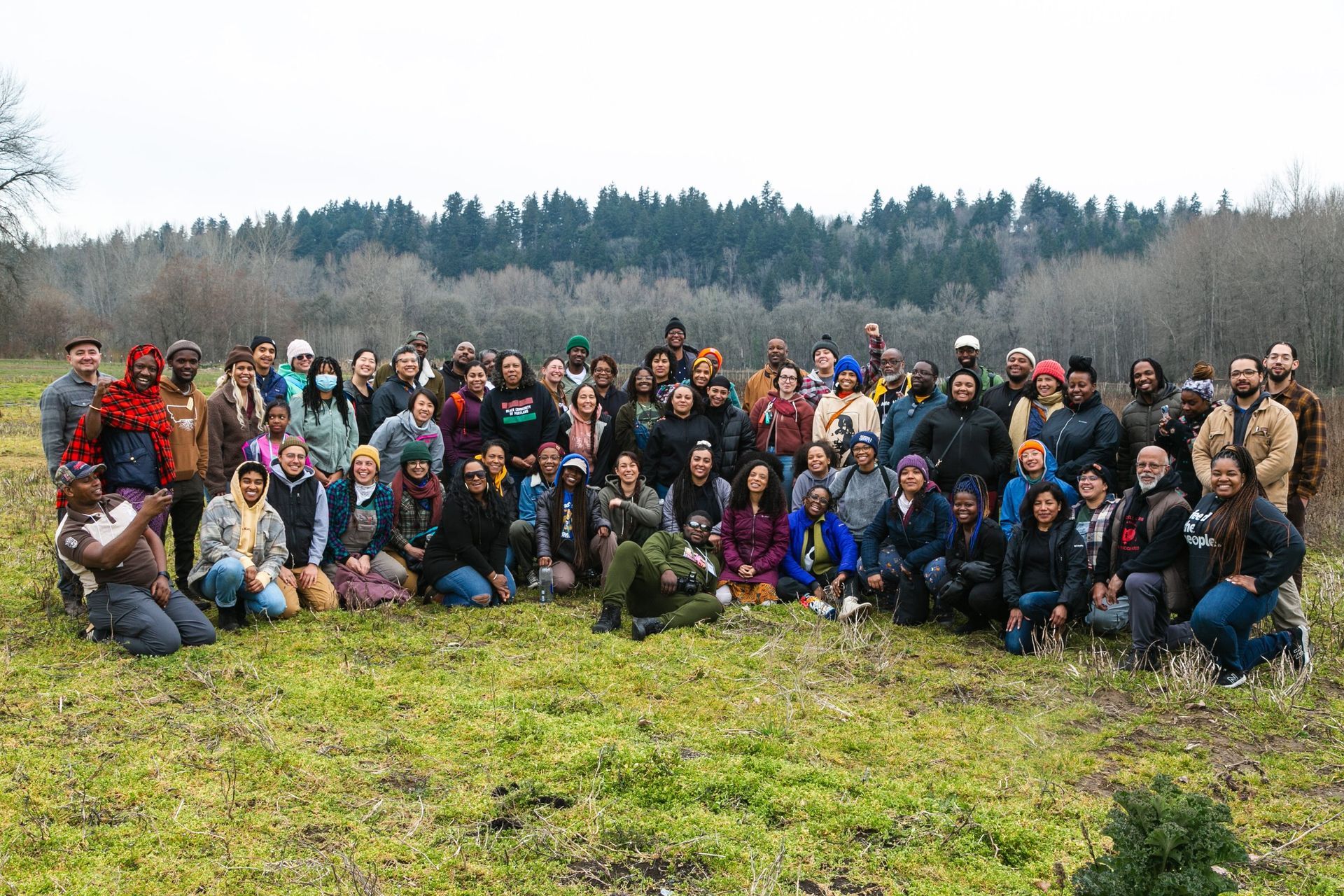
BLACK AGRICULTURAL ECOSYSTEM
The Black Agricultural Ecosystem (BAE) is the living mycelium of Black Food System Curators across the Pacific Northwest — a powerful coalition of urban Black farms and organizations working in unity to reclaim land, nourish communities, and build economic resilience.
FEED BLACK OREGON
Feed Black Oregon, in partnership with the Ebony Collective, is a Black-led collaborative building a resilient, self-sustaining food system across Oregon. United by a vision of food sovereignty and economic justice, farmers, organizers, artists, distributors, and community groups work together to address immediate hunger while co-creating long-term infrastructure — including food hubs, distribution networks, value-added production, and a circular Black food economy that keeps resources within the community. Through initiatives like the Black Food Systems Assessment — mapping producers, storage, policy, transportation, distribution, and storytelling — Feed Black Oregon confronts the disproportionate food insecurity faced by Black and rural communities across the state. The mission: to nourish, empower, and sustain Black lives through collective action and systemic change.
The BAG
The Black Agricultural Guild (B.A.G.)
is a collaborative initiative of Black farmers working together to strengthen local food systems through coordinated crop planning. Each farmer cultivates 3-4 crop varieties on designated 30x100 sqft plots, producing, producing aggregated community crops that support mutual resilience. Feed’em Freedom contributes by growing plant starts for distribution to participating farmers, helping scale production. The Guild’s goals include generating sustainable revenue, building a circular economy within local communities, stabilizing food networks for emergency relief, and creating a unified, supported network of Black farmers through streamlined sales and shared resources.
FOOD PANTRY
Black Community Food Center/Food Pantry
4450 NE 131st Street
Portland, OR 97230
Wednesday - 2:00pm - 4:30pm
Thursday - 3:00pm - 6:00pm
Friday - 2:00pm - 4:30pm
MUDBONE GROWN
Mudbone Grown is a Black-owned farming enterprise based in Oregon, co-founded in 2016 by Shantae Johnson and Arthur Shavers. Initially launched as a one-acre urban farm near Portland International Airport through a partnership with the Oregon Food Bank, the farm later expanded to a 19–20 acre property in Corbett, where it continues to operate today. The farm grows blueberries, pumpkins, and other crops while also providing technical assistance to emerging Black and BIPOC farmers, and producing value-added food products. Mudbone Grown is also deeply involved in community education and healing, dedicated to bridging racial divides through shared agriculture and food justice. Through programs like Maroon Mob, Mudbone Grown supports new farmers in learning skills rooted in regenerative and culturally relevant practices. Their work rewrites the narrative of Black farming in Oregon — a state drought with anti-black history — by building land access, intergenerational knowledge, and economic resilience for Black communities.